Small Kitchen Organization That Actually Holds Up
lifestyle
|
September 17, 2026
You reorganize the kitchen on a Saturday. Everything has a place, the drawers close properly, and the counter is clear. Three weeks later it looks exactly as it did before.
This is not a discipline problem. It is usually a design problem. Systems that fight how you actually move around a kitchen take effort to maintain, and anything requiring sustained effort loses to a busy Tuesday.
The version that survives is built around what you do rather than what looks tidy in a photograph.
Start by Taking Things Out
No organization system rescues a kitchen holding more than it has room for. Reducing the volume comes first.
Pull everything out of one cupboard at a time rather than emptying the whole kitchen, which is how these projects stall halfway. Sort into three piles: things used weekly, things used a few times a year, and things not used in over a year.
The weekly pile goes back in the most accessible places. The occasional pile goes high, low, or into another room. The third pile is the honest one, and most kitchens contain a surprising amount of it — the specialty appliance used twice, the mismatched containers with no lids, the four spatulas when two would do.
Organize by Zone, Not by Category
Most people group like with like: all the pans together, all the utensils together. Grouping by task works considerably better.
Think in zones. A prep zone near your main work surface holds chopping boards, knives, and mixing bowls. A cooking zone beside the stove holds pans, cooking utensils, oil, salt, and pepper. A washing zone near the sink holds cleaning supplies and the drying rack. A storage zone holds containers and wraps.
The test is how many steps a task takes. If making a cup of tea means crossing the kitchen three times, the kettle, mugs, and tea are in the wrong relationship to each other. Putting them together is a five-minute change that you will feel every single day.
Use the Vertical Space
Small kitchens almost always have unused height, and this is where most of the recoverable space hides.
Shelf risers double the usable height of a cupboard by letting you stack plates and bowls in two levels rather than one tall pile. Under-shelf baskets clip onto an existing shelf and create storage in the dead air above the items below.
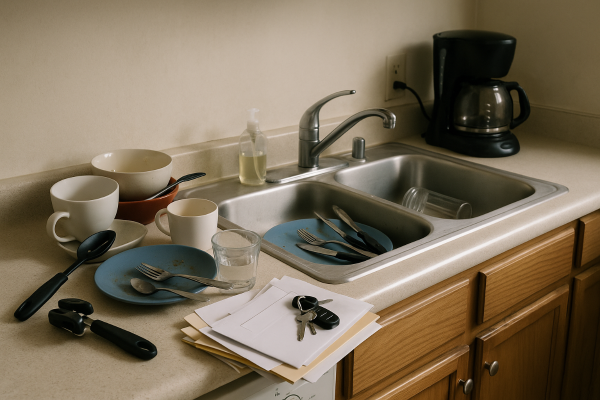
Wall space is the other underused surface. A magnetic knife strip frees an entire drawer and keeps blades in better condition than a drawer does. Hooks on the inside of cupboard doors hold measuring spoons, pot lids, and cloths. A rail above or beside the stove keeps frequently used utensils within reach and off the counter.
The Counter Rule
Counter space is the most valuable real estate in a small kitchen, and it is the first thing to disappear.
A workable rule: only items used daily live on the counter. Kettle, yes. Toaster, if you use it every morning. The stand mixer used monthly, no — that belongs in a cupboard even though it is heavy and inconvenient to move, because the counter space is worth more than the convenience.
Everything else that accumulates there — post, keys, chargers, the things that have no home elsewhere in the house — needs a home elsewhere in the house. Kitchen counters collect household clutter because they are flat, visible, and near the door, not because the items belong there.
Containers Only After Decluttering
Buying storage containers is the most satisfying part of organising and the most common mistake, because containers bought first determine what you keep rather than the other way round.
Declutter first, measure your actual shelves second, then buy. Square and rectangular containers use space far more efficiently than round ones. Clear containers mean you can see what is inside without opening anything, which is what stops things being forgotten at the back.
Decant only what earns it. Pasta, rice, flour, and cereal benefit from clear jars because you can see the level. Decanting everything creates a labeling chore and hides cooking instructions you may need.
The Drawer Problem
Deep drawers turn into pits where things settle at the bottom and are never seen again.
Dividers are the fix, and adjustable ones adapt as your needs change. For utensils, an insert with compartments prevents the single-heap problem. For deep drawers, vertical storage works better than horizontal — standing pot lids, chopping boards, and baking trays on their edges makes every one of them visible and reachable.
One deliberate junk drawer is fine and probably inevitable. The point is that it is one, with a boundary, rather than a quality that spreads to every drawer in the kitchen.
The Fridge Counts Too
Kitchen organization usually stops at the cupboards, which is why food gets lost at the back of the fridge and thrown away.
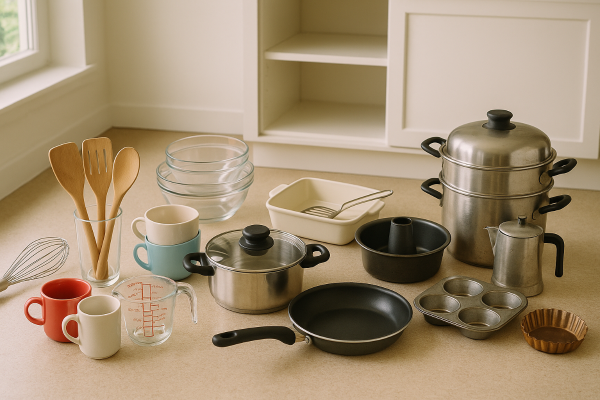
Give shelves rough jobs: leftovers on one, dairy on another, raw meat on the lowest shelf where it is coldest and cannot drip onto anything. Use a clear bin or a designated shelf area for things that need eating soon, and check it before you shop.
The habit that saves the most food is moving older items to the front when you unpack shopping. It takes an extra minute and it is the reason things get eaten rather than discovered later.
Organizing With Very Little Storage
Some kitchens simply do not have enough cupboards, and no amount of arranging changes that. The answer is usually moving things out rather than fitting them in better.
Rarely used items — the roasting can used twice a year, the large serving dishes, the second set of glasses — do not need to live in the kitchen. A hallway cupboard, a shelf in another room, or the top of a wardrobe works perfectly well for anything used a handful of times a year.
A narrow rolling cart fits in gaps as small as twenty centimeters and adds three shelves of storage plus a work surface. A shelf above a doorway holds items you rarely reach for. And in a rented kitchen, tension rods, adhesive hooks, and freestanding units add storage without any drilling.
Keeping It That Way
Maintenance is where most systems fail, and the answer is making it small and routine rather than occasional and large.
Two minutes at the end of cooking to return things to their zones prevents the gradual drift that undoes everything. A five-minute fridge check before shopping keeps food from being lost. A brief look through one cupboard each month catches accumulation before it becomes a project.
And when something keeps ending up in the wrong place, that is information rather than a failure. It usually means its assigned home is inconvenient for how you actually use it. Move the home rather than fighting the habit — that adjustment is what makes an organized kitchen stay organized.
Sources & References
[1] U.S. Food and Drug Administration — Refrigerator storage and food safety in the home — https://www.fda.gov/food
[2] USDA Food Safety and Inspection Service — Kitchen food safety and safe storage practices — https://www.fsis.usda.gov/food-safety
[3] U.S. Environmental Protection Agency — Reducing household food waste — https://www.epa.gov/recycle
You May Like
How to Make a Home Feel Calmer Without Redecorating
September 17, 2026
Zucchini noodles
February 12, 2023
Advice for traveling with children
January 25, 2023

Valentine's Day activities in London
January 19, 2023

Largest Refugee Crises To Follow In 2022
January 19, 2023

The Most Romantic Hotels and Resorts in the World for Valentine's Day
December 17, 2022
Recommended Reads

When Dinner Goes Wrong: Fixes for Too Salty, Bland, Burnt, and Overcooked
September 17, 2026
Largest Refugee Crises To Follow In 2022
January 19, 2023
Challenges Immigrants and Refugees Face in the US
January 10, 2023