Meal Prep That Doesn't Get Boring by Wednesday
deliciousfood
|
September 17, 2026
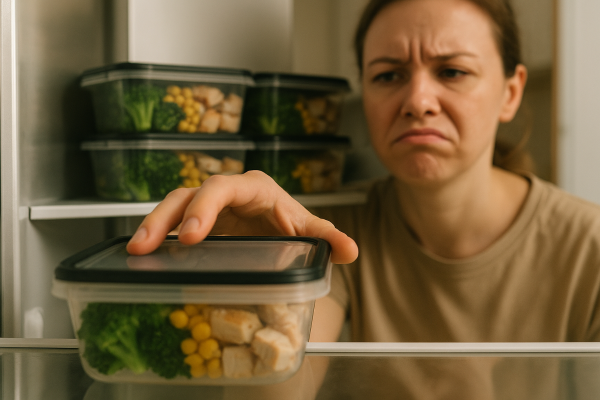
The standard meal prep photo shows five identical containers in a row. By Wednesday, most people who made them are looking at container number three with genuine resentment and ordering something instead.
The problem is not meal prep. It is that cooking five copies of one meal guarantees you will be sick of it before the week ends, no matter how good it was on Sunday.
There is a better structure, and it takes roughly the same amount of time.
Prep Components, Not Meals
Instead of assembling five finished dinners, cook a small number of building blocks that can be combined in different ways.
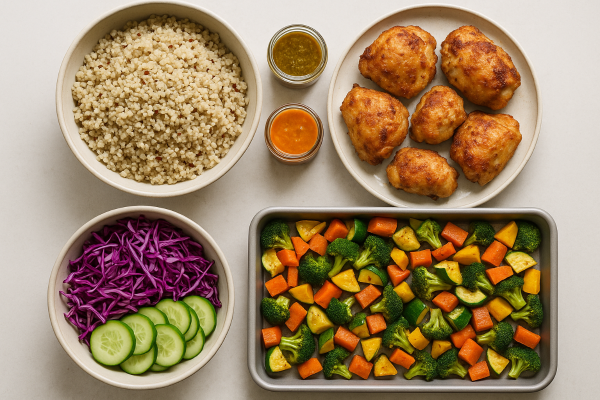
A typical Sunday might produce a grain, a protein or two, a tray of roasted vegetables, a raw element, and a sauce. None of those is a meal. Together they make a dozen.
Roast chicken, rice, roasted peppers and zucchini, and a yoghurt sauce becomes a rice bowl on Monday, a wrap on Tuesday, a salad with the chicken sliced cold on Wednesday, and fried rice on Thursday. Same ingredients, four experiences.
The Five-Part Framework
A useful way to plan a session is to cover five slots rather than five meals.
- A grain or starch: rice, quinoa, couscous, pasta, or roasted potatoes. Cook a large batch of one.
- One or two proteins: roasted chicken thighs, a tray of baked tofu, a pot of lentils, hard-boiled eggs, or seasoned mince.
- A roasted vegetable tray: whatever is cheap and in season, tossed in oil and roasted while everything else cooks.
- Something raw and crunchy: shredded cabbage, sliced cucumber, cherry tomatoes, or a bag of salad. This is what keeps prepped food from tasting tired.
- Two sauces: one creamy, one sharp. Sauce does more to change the character of a meal than any other single element.
Prep the first four on Sunday. Make the sauces then too, or keep the ingredients to hand and make them in two minutes on the night.
Sauce Is the Variety Lever
This is the part most meal prep guides skip, and it is the single biggest difference between food you look forward to and food you tolerate.
The same chicken and rice tastes completely different under a lemon and herb yoghurt, a peanut and lime dressing, a garlic and chilli oil, or a mustard vinaigrette. You have not cooked anything new. You have changed the whole meal.
Keep two or three sauces in the fridge at a time. Most take under five minutes and use pantry ingredients. A jar of something sharp and a jar of something creamy will carry you through a week of otherwise plain components.
Cook Once, Eat Differently
Some ingredients are particularly good at changing character, and building your prep around them pays off.
Roast chicken works hot with vegetables, cold in a salad, shredded into a wrap, or stirred through pasta. Cooked lentils work as a warm side, a cold salad base, a soup thickener, or blended into a dip. Roasted vegetables work hot, cold, blended into soup, or folded into an omelette.
Rice deserves a specific mention. Cooked rice that has been chilled makes far better fried rice than fresh rice does, so Sunday's leftover rice is Thursday's best meal rather than a sad reheat.
Timing the Session
A full prep session should take about ninety minutes, and most of that is waiting rather than working.
Start the oven first and get the roasting trays in, since they take longest and need no attention. Start the grain next. While both cook, chop the raw vegetables and make the sauces. Everything finishes at roughly the same time.
Working in this order means you are rarely standing idle, and it is why a session that sounds like a whole afternoon actually fits into the time it takes to watch a film.
What Keeps Well and What Doesn't
Not everything survives four days in a container, and knowing which is which prevents disappointment.
Keeps well: cooked grains, roasted root vegetables, braised and stewed dishes, cooked pulses, hard-boiled eggs, sturdy raw vegetables like carrots and cabbage, and most sauces.
Keeps badly: dressed salad leaves, anything fried and crisp, avocado, cooked fish beyond a day or two, and pasta already mixed with sauce, which absorbs everything and goes soft.
The workaround for most of these is keeping the fragile element separate and adding it at the last moment. Dress a salad in the bowl, not in the container.
Food Safety for Prepped Food
Prepped food follows the same rules as any leftovers, and it is worth being clear about them since a Sunday session means eating something on Thursday.
Cool cooked food quickly in shallow containers and refrigerate within two hours. Cooked food keeps three to four days in the refrigerator, which is exactly why a Sunday session covers Monday through Thursday and not the whole week.
If you want Friday covered, freeze two portions on Sunday and move them to the fridge on Wednesday night. Reheat everything to 165°F, and reheat only the portion you are eating rather than the whole container.
Containers and Portioning
The equipment matters less than most guides suggest, but a few choices genuinely help.
Glass containers do not stain or hold odors, go straight from fridge to oven or microwave, and last for years. They are heavier and more expensive. Good plastic is lighter and fine for most purposes, though it stains with tomato and curry and should be replaced when it warps or cracks.
What matters more is having containers in a few sizes and, crucially, lids that match. Most kitchen container chaos comes from a drawer of bases with no corresponding lids. Square containers stack better and waste less fridge space than round ones.
Prepping for One Person
Most meal prep advice assumes a household, and cooking for one has a different failure mode: four days of the same thing is much harder to face alone.
Component prep helps here more than anywhere. So does freezing half of everything on the day you cook it, rather than at the end of the week when it has already been in the fridge for days. Two portions eaten fresh and two frozen gives you variety now and a ready meal in a two weeks.
Buying smaller quantities of more things also beats buying in bulk, even though the per-unit price is worse. A large bag of spinach that goes off is more expensive than a small one that gets eaten.
Starting Smaller Than You Think
The most common reason meal prep fails is starting with an ambitious four-hour session that nobody repeats.
Begin with two components rather than five. Cook a big batch of one grain and roast one tray of vegetables. That alone removes the hardest part of a weeknight dinner, and it takes forty minutes of mostly unattended oven time.
Add a protein the following week, then a sauce. Building the habit gradually is far more likely to survive a busy two weeks than an elaborate system that depends on a free Sunday you will not always have.
Sources & References
[1] USDA Food Safety and Inspection Service — Leftovers, cooling, and safe reheating temperatures — https://www.fsis.usda.gov/food-safety
[2] FoodSafety.gov — Cold food storage chart — https://www.foodsafety.gov
[3] U.S. Department of Agriculture — MyPlate meal planning guidance — https://www.myplate.gov
You May Like

How to Eat Well When You Travel
September 17, 2026

Top 5 Best Beaches In The World
January 27, 2023

How to plan holidays within a budget
January 23, 2023

The 7 most underrated cities in the world
January 18, 2023

Date Ideas for Valentine's Day in 2022 That You Wouldn't Expect
December 19, 2022

How the Russia-Ukraine Conflict May Affect the Global Prices of Oil and Gas
December 15, 2022
Recommended Reads

Banana Bread
February 16, 2023
Your best travel tips/travel secrets
January 23, 2023
Most Expensive Valentine's Day Destinations in the World
December 30, 2022