How to Store Food So It Actually Lasts
deliciousfood
|
September 17, 2026
You buy a bag of salad on Sunday and throw half of it away on Thursday. The tomatoes went mealy in the fridge. The bread went stale faster than it should have. Somewhere in the back there is a container of something you no longer recognize.
Most of this comes down to storage rather than shopping. Food lasts considerably longer when it is kept in the right place at the right temperature, and a few of the habits most of us learned by default are actively shortening shelf life.
Start With the Temperature
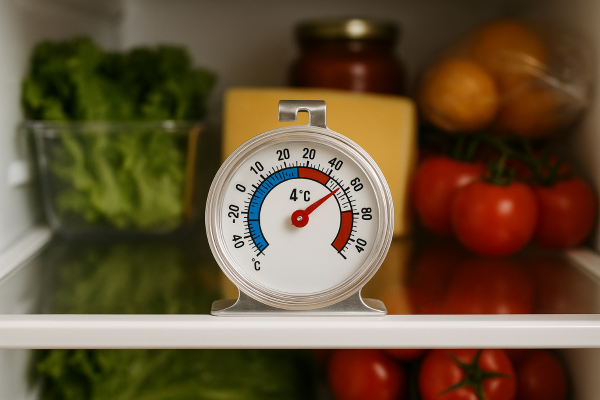
Your refrigerator should sit at 40°F (4°C) or below, and your freezer at 0°F (-18°C). Many home fridges run warmer than their owners assume, particularly if they are full or if the door is opened often.
This matters because bacteria multiply fastest between 40°F and 140°F, a range the USDA calls the danger zone. In that range, bacteria can double in number in as little as twenty minutes.
A cheap appliance thermometer placed on a middle shelf will tell you what your fridge is actually doing rather than what the dial claims. It is one of the least glamorous kitchen purchases available and one of the most useful.
Your Fridge Has Zones, and They Matter
Temperature is not uniform inside a refrigerator, and putting food in the wrong zone shortens its life.
The door is the warmest part, because it is exposed to room air every time you open it. Condiments, jams, and drinks belong there. Milk and eggs do not, despite the egg rack many fridges still include.
The back of the bottom shelf is the coldest area and is where raw meat, poultry, and fish belong. Keeping them low also prevents drips landing on food below, which is a genuine cross-contamination risk rather than a fussy rule.
Middle shelves suit dairy, leftovers, and cooked food. Crisper drawers usually have humidity controls: high humidity suits leafy greens and herbs, low humidity suits fruit that releases moisture.
Things That Should Never Go in the Fridge
Refrigerating the wrong items makes them worse rather than better, and several of these are extremely common.
- Tomatoes. Cold air breaks down the compounds that give them flavor and turns the texture mealy. Keep them on the counter, stem side down.
- Potatoes. Refrigeration converts starch to sugar, which makes them sweet and causes them to darken when cooked. Store somewhere cool, dark, and ventilated.
- Onions and garlic. Cold and humidity make onions soften and garlic sprout. Keep them dry and ventilated, and away from potatoes, which speed each other's spoilage.
- Bread. It stales considerably faster in the fridge than at room temperature. Freeze what you will not eat within a couple of days instead.
- Honey. It crystallizes in cold. It keeps indefinitely in a sealed jar in the cupboard.
- Whole melons and unripe stone fruit. Ripen at room temperature first, then refrigerate once cut or ripe.
- Basil. It blackens in the cold. Treat it like flowers, stems in a glass of water on the counter.
The Ethylene Problem
Some fruits release ethylene gas as they ripen, and that gas accelerates ripening in anything nearby. This is why a single bag of produce can turn all at once.
Strong ethylene producers include apples, bananas, avocados, tomatoes, peaches, and pears. Ethylene-sensitive items include leafy greens, broccoli, cucumbers, carrots, and most herbs.
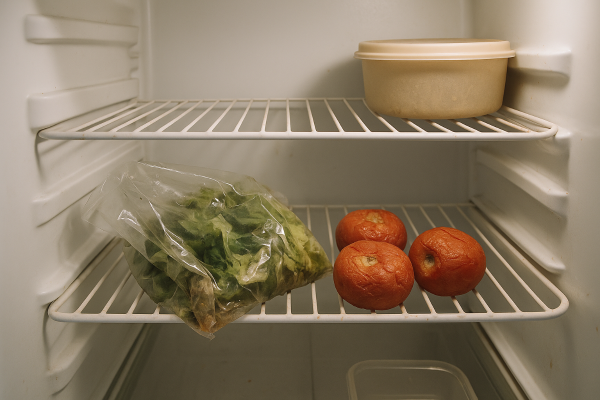
Separating the two groups costs nothing and noticeably extends how long your greens last. It also explains the old trick of putting an apple in a bag with unripe avocados, which genuinely works for the same reason.
Leftovers: The Rules Worth Following
This is where storage stops being about quality and starts being about safety.
Cooked food should be refrigerated within two hours. If the room is above 90°F, that window drops to one hour. Put leftovers into shallow containers rather than one deep pot, because a large mass of hot food cools slowly and spends too long in the danger zone.
Cooked leftovers keep in the refrigerator for three to four days, or three to four months in the freezer. Reheat them to 165°F, and bring soups, sauces, and gravies to a rolling boil.
Label containers with the date. It sounds excessive until the third time you stand holding something you cannot place.
Thawing Safely
There are three safe ways to thaw frozen food, and several common methods that are not safe at all.
The refrigerator is the safest and slowest, allowing roughly 24 hours per five pounds. Food thawed this way stays safe throughout and can be refrozen. Cold water thawing is faster but needs the food in a leak-proof bag with the water changed regularly, and anything thawed this way should be cooked before refreezing. Microwave thawing is fastest, and food thawed in a microwave should be cooked immediately.
What not to do: thawing on the counter, in hot water, in a slow cooker, or in a dishwasher. All of them leave food sitting in the danger zone while the outside warms long before the middle does.
Freezing Well
Freezing preserves food almost indefinitely from a safety standpoint, but quality declines, and most of that decline is avoidable.
Freezer burn is dehydration caused by air contact. Remove as much air as possible, use freezer-grade bags or containers rather than the packaging things came in, and press bags flat so they freeze quickly and stack efficiently.
Freeze in portions you will actually use. A single block of soup means defrosting all of it. Flat bags freeze faster and thaw faster, which is better for texture as well as convenience. Leave a little headspace in containers for liquids, which expand as they freeze.
Small Habits That Extend Shelf Life
A few adjustments make a disproportionate difference.
Do not wash produce until you are about to use it, since surface moisture speeds spoilage. The exception is leafy greens, which last longer washed, thoroughly dried, and stored with a dry paper towel to absorb moisture.
Store herbs like cut flowers, stems in water, loosely covered. Keep mushrooms in paper rather than plastic so they do not go slimy. Move opened packages into sealed containers rather than folding the bag over. And practice first in, first out by moving older items to the front when you unpack shopping.
A Weekly Rhythm That Prevents Waste
Storage technique only helps if you actually eat what you stored, and that is a scheduling problem more than a container problem.
Keep an eat-soon area in the fridge — one shelf, one bin, or just the front of the middle shelf — and move anything approaching its limit into it. Check that area before you shop rather than after, since a shopping trip planned around what needs using is the single most effective anti-waste habit there is.
Pick one night a week as a clear-out meal. A stir-fry, a frittata, a soup, or a tray bake will absorb almost any combination of vegetables and leftover protein. Doing this on the night before your usual shop means you start each week with an empty fridge rather than an archaeological one.
When to Throw It Out
Use-by dates are about safety and should be respected. Best-before dates are about quality, and plenty of food is perfectly fine past them.
Trust your senses for quality, but not for safety. Food contaminated with harmful bacteria frequently looks, smells, and tastes completely normal, which is exactly why the time limits above exist. Reheating does not make unsafe food safe again.
Visible mould on soft foods, cooked dishes, and soft fruit means the whole item goes. On hard cheese and firm vegetables such as carrots and cabbage, cutting away an inch around the affected area is generally considered acceptable. If you are unsure, throw it out — the cost of a discarded container is far lower than the cost of food poisoning.
Sources & References
[1] USDA Food Safety and Inspection Service — Danger Zone, leftovers, and safe food handling — https://www.fsis.usda.gov/food-safety
[2] U.S. Food and Drug Administration — Refrigerator and freezer storage guidance — https://www.fda.gov/food
[3] FoodSafety.gov — Cold food storage charts and safe thawing methods — https://www.foodsafety.gov
You May Like
SWEET POTATO SALAD
February 10, 2023

Your Best Travel Hacks/Travel Secrets
January 22, 2023
Challenges Immigrants and Refugees Face in the US
January 10, 2023

Factors to consider when choosing a vacation location
January 6, 2023

Which stocks have tanked due to the Russia-Ukraine Conflict?
December 30, 2022
5 of The Best MICHELIN-Starred Restaurants In California Wine Country
December 21, 2022