Packing Light Without Running Out of Things
tourism
|
September 17, 2026
Everyone who has travelled with a large suitcase has had the same realisation somewhere around day four: most of what is in the bag has not been touched.
Packing light is not really about restraint. It is about choosing items that work with each other, so a small number of things produces a large number of outfits.
Done properly, the same system covers a long weekend and a month, because after about five days you are washing things rather than bringing more.
The Color Rule
This is the single change that makes the biggest difference, and most people skip it.
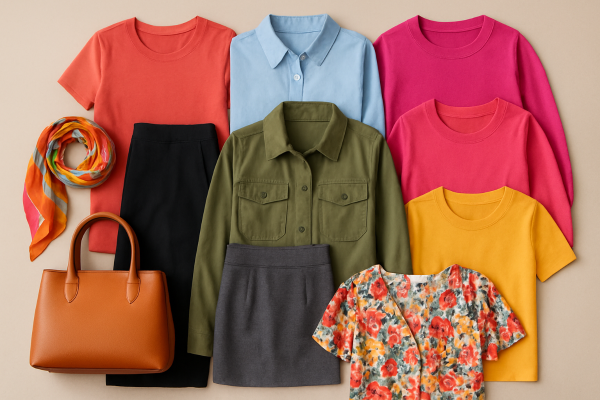
Pick a neutral base — black, navy, grey, olive, or beige — and make sure every bottom, every outer layer, and both pairs of shoes sit inside it. Then let color appear in tops and one or two accessories.
The result is that every top works with every bottom. Five tops and two bottoms become ten outfits rather than five. Bring one bottom in a color that clashes with half your tops and the maths collapses immediately.
A Framework That Covers a Week
For a week in moderate weather, this is roughly the shape of it.
- Two bottoms: one you can walk all day in, one slightly smarter. Both in your base color.
- Four or five tops that all work with both bottoms.
- Two layers: a light one for indoors and evenings, and something for wind or rain.
- One item that dresses the whole thing up — a shirt, a dress, or a jacket — if the trip calls for it.
- Two pairs of shoes: one genuinely comfortable for walking, one other. Wear the bulkier pair on the plane.
- Underwear and socks for about five days, plus the intention to wash.
That fits in a carry-on with room left over, and it covers most trips regardless of length.
Plan to Wash
The reason this works for a month as well as a week is that laundry resets the whole thing.
Bring a small amount of travel detergent or a solid laundry bar. Most items wash in a sink in five minutes and dry overnight, particularly synthetics and merino wool. Cotton and denim are the slowest to dry and the heaviest to carry, which is worth weighing up.
A universal sink plug is genuinely useful, since a surprising number of accommodations do not have one. A few meters of paracord or a travel clothesline handles drying. In cities, a launderette takes an hour and costs very little.
Fabric Choices Matter More Than Quantity
What things are made of determines how much you need to bring.

Merino wool is the standout for travel. It resists odour well enough to wear several times between washes, regulates temperature across a range, and dries reasonably fast. It is expensive, and a couple of pieces do more work than a drawer of cotton.
Synthetics dry fastest and pack smallest, which suits active trips. Cotton is comfortable and breathable but heavy, slow to dry, and holds odour. Linen is excellent in heat and creases enormously, which some people mind and others do not.
Avoid anything that only works with one other item, and anything that needs ironing.
Packing the Bag
How you pack affects both space and how the contents survive the journey.
Rolling generally saves space and reduces creasing for soft items. Folding suits structured pieces. Packing cubes do not create space by themselves, but they compress, keep categories separate, and mean you are not unpacking the whole bag to find socks — which in practice is what stops a bag descending into chaos by day three.
Put heavy items near the wheels or the back panel, close to your spine if it is a backpack. Fill shoes with socks and small items. Keep anything you need during the journey in an outer pocket rather than buried.
Toiletries Are Where Weight Hides
Most people carry considerably more liquid than they need, and liquids are heavy and subject to airport limits.
Decant into small bottles rather than carrying full-size ones. Better still, switch what you can to solid — shampoo bars, solid conditioner, and bar soap avoid liquid limits entirely and cannot leak.
Remember that accommodation usually supplies basics, and that anything you run out of can be bought at your destination. The exception is prescription medication, which should travel in your hand luggage in its original labelled packaging, with enough for the trip plus a few extra days.
Electronics and Cables
The cable situation is where bags quietly gain weight and tangle.
Take one multi-port charger rather than a separate plug for each device, and one universal travel adaptor rather than several. Two cables that fit everything beats five that each fit one thing.
A power bank is worth the weight, particularly if you are using your phone for navigation, tickets, and translation all day. Note that power banks must travel in cabin baggage rather than checked luggage, which is a rule people get caught out by regularly.
What Not to Bring
A few categories account for most unnecessary weight.
Clothing for a scenario that probably will not happen — the formal outfit for the dinner that may not materialize, the swimwear for the pool you might not use. Books, unless you will genuinely read them; one is fine, four is optimism. Full-size anything. Shoes beyond two pairs. Items brought because of the weather at home rather than the weather at your destination.
The honest test is whether you have used it on the last two trips. If not, it is not coming on this one.
Packing for Cold and Wet Weather
Winter travel is where packing light gets genuinely difficult, since bulky items dominate the bag.
Layers solve it better than thickness. Three thin layers regulate temperature across a wider range than one heavy coat and pack considerably smaller. Merino base layers are worth their cost here, and a packable down or synthetic jacket compresses to roughly the size of a water bottle.
Wear the bulkiest items on travel days rather than packing them — coat, boots, and heaviest sweater go on your body, not in the bag. Compression cubes genuinely help with winter clothing in a way they do not much with summer clothing, since the volume being compressed is mostly air.
The Night-Before Check
Lay everything out on the bed before it goes in the bag and remove two things. Almost everyone can, and almost nobody misses them.
Then check the three items that actually matter and are genuinely hard to replace: documents, medication, and the means to pay for things. Everything else can be bought at your destination, which is worth remembering when the packing starts to feel high-stakes.
Sources & References
[1] Transportation Security Administration — Carry-on rules, liquids, and lithium battery guidance — https://www.tsa.gov
[2] U.S. Department of State — Traveler's checklist and packing guidance — https://travel.state.gov
[3] Centers for Disease Control and Prevention — Travelers' Health: packing medications and supplies — https://wwwnc.cdc.gov/travel
You May Like
How to Eat Well When You Travel
September 17, 2026

How To Plan A Vacation On A Budget
January 24, 2023
Long-term and durable solutions for refugees
January 15, 2023

MICHELIN Guide Slovenia : TaBar, when fine dining and bistro converge
December 21, 2022

Which markets have fallen or suffer the risk of falling due to the conflict
December 15, 2022

How will a prolonged Russia-Ukraine conflict affect your investment portfolio?
December 12, 2022
Recommended Reads

Are Zucchini Noodles Good for You?
January 25, 2023
Which stocks went up in price due to the Russia-Ukraine Conflict?
December 25, 2022
MICHELIN Guide Slovenia : TaBar, when fine dining and bistro converge
December 21, 2022